By Jon Perez, Catholic Saskatoon News
Saskatoon’s community organizations, whether non-profit or faith-based groups, are preparing to support people experiencing homelessness as winter weather approaches, while calling for broader solutions to housing insecurity, poverty and social isolation.
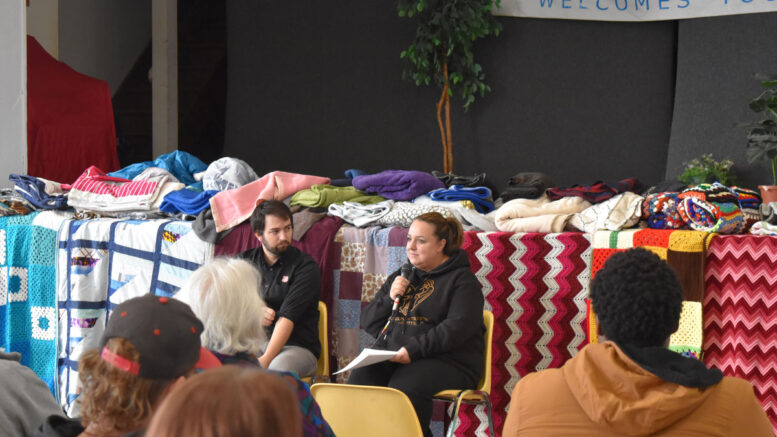
The Prairie Centre for Ecumenism (PCE) and the Saskatoon Inner City Council of Churches (ICCC) held an ecumenical event Oct. 24 at St. Mary Parish Hall to learn about the needs of people living on the streets and how local service organizations are responding.
The “Learn, Connect, Respond Together” ecumenical event was described as an opportunity “to learn about local service opportunities, connect with churches, ministries ad organizations, and explore how we can respond to the needs in our community together.” The day included displays, presentations, and networking.
Roberto DeSandoli, Chair of the Inner City Council of Churches and pastor of St. Andrew Presbyterian Church, moderated the day and emphasized the importance of PCE and ICCC joining forces to hold the event.
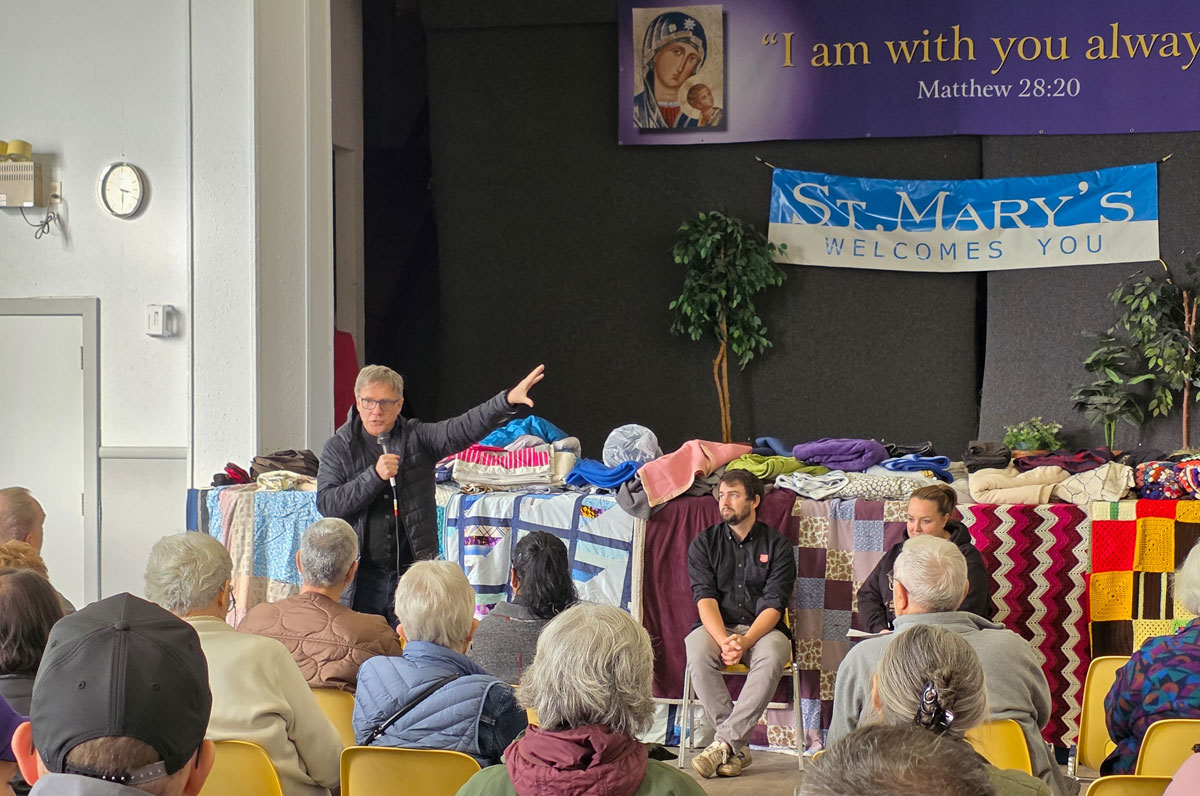
Fr. Kevin McGee, pastor of St. Mary Parish in the core neighbourhood of Saskatoon, addresses those gathered for the Oct. 24 ecumenical event. (Photo by Jon Perez, Catholic Saskatoon News)
Looking beyond emergency shelter
In presentations during the Saturday afternoon event, St. Mary Parish Mission and Outreach Co-ordinator Jennifer Nunes, Salvation Army Saskatoon Shelter Manager David Clare, homeless advocate David Fineday, and St. Mary parishioner Joshua Opputeh emphasized the need to look beyond emergency shelter and consider what people need to build stable, meaningful lives.
Their remarks highlighted the importance of affordable housing, warm clothing, food, recreation, human connection and sustained support from local organizations and all levels of government—federal, provincial, and municipal—to help unhoused people get back on their feet.
Fineday challenged community members to consider whether current responses are addressing the needs of people living on the streets. Rather than focusing solely on donations or temporary assistance, he encouraged people to ask what those experiencing homelessness actually require.
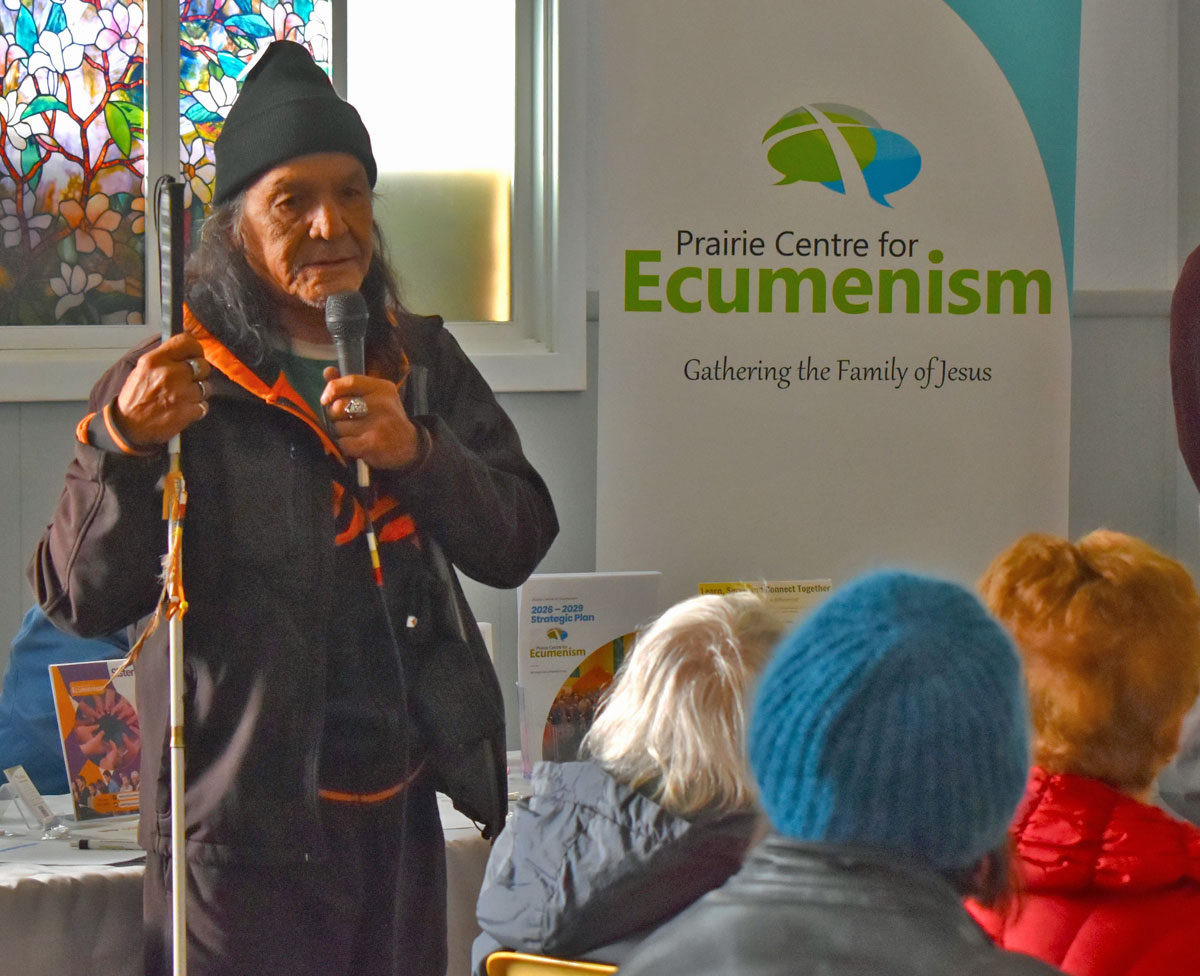
David Fineday spoke from his lived experience without housing. (Photo by Jon Perez, Catholic Saskatoon News)
“What do they need out there?” he asked, raising concerns that the community doesn’t fully understand the challenges people face each day. His comments reflected a broader call for solutions shaped by the experiences of people who need support, rather than assumptions made on their behalf.
Affordable housing was central to Fineday’s concerns. He questioned how people could get off the streets without access to affordable housing, pointing to the difficulties faced by those without a stable place to live.
He also challenged the tendency to respond to homelessness with complaints rather than practical action. He suggested that homelessness cannot be resolved simply by making people less visible, as it requires addressing the circumstances that leave them without secure housing in the first place.
Listening and building relationships
Fineday also highlighted the need for community spaces, recreation, and opportunities for young people. He described community centres and recreational activities as ways to bring people together and build a stronger sense of belonging.
His concerns extended beyond emergency survival to the social conditions that help people feel connected to their neighbourhoods. He suggested that access to meaningful activities and welcoming public spaces should be part of a comprehensive community response, not an afterthought.
For Fineday, listening and building relationships were also key to helping people in difficult circumstances. He reflected on experiences involving churches and community connections, emphasizing the value of reaching out rather than remaining on the sidelines.
He said communities must genuinely try to understand people’s situations and find practical ways to help. That approach requires more than good intentions: it calls for sustained engagement, cooperation and a willingness to respond to needs as they arise.
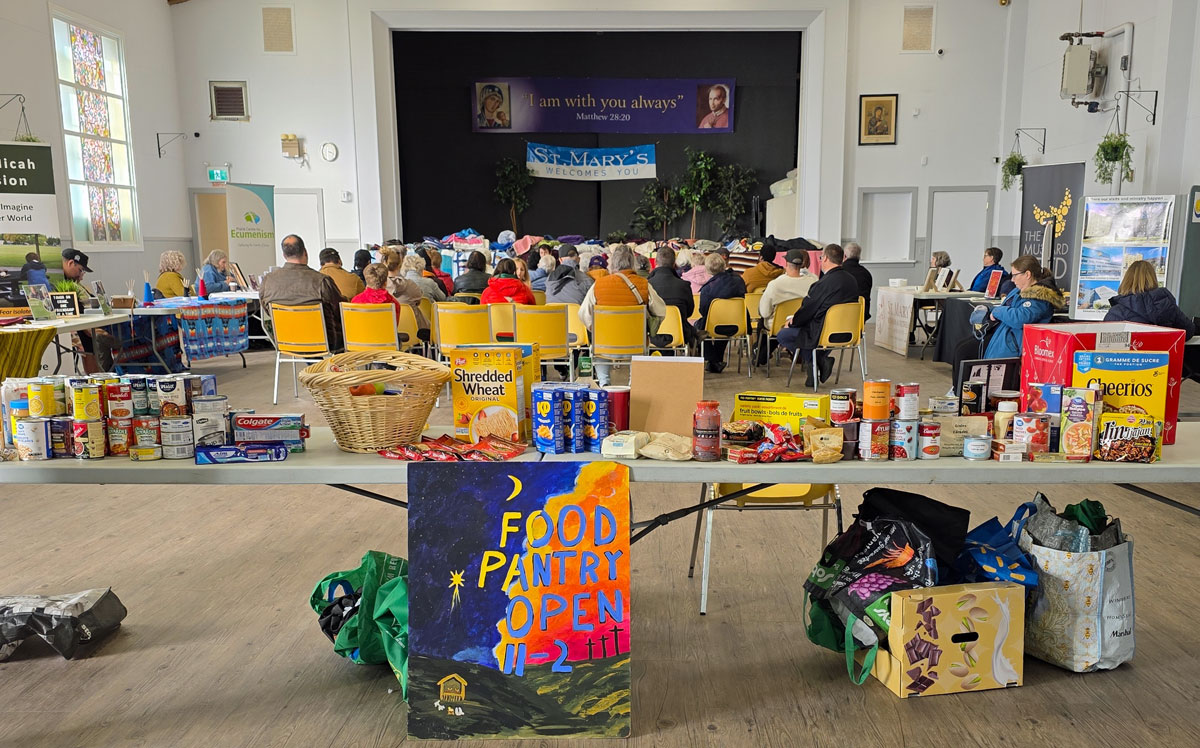
Participants in the ecumenical event brought donations of food and blankets for churches providing outreach in the core neighbourhood to distribute. (Photo by Jon Perez, Catholic Saskatoon News)
Saving lives in the Saskatchewan winter – and saving souls from the scourge of indifference:
An overnight winter warming location at St. Mary Parish Hall will open again on Nov. 1 for men without shelter. (Another location in the city provides an overnight location for women.) Operated by the Salvation Army with funding from various levels of government, the warm-up centre in the parish hall has also become a focus for volunteer outreach and donated support coordinated by St. Mary Mission and Outreach Ministry. To learn more about how to help visit: LINK.
Jennifer Nunes, who discussed winter outreach and community support provided through St. Mary Mission and Outreach Ministry, described the scale of the challenge that local service providers face. She emphasized that the people seeking shelter are individuals with families, friendships, histories and hopes.
“Those numbers represent human beings. They are sons and daughters, brothers, and sisters, and friends who deserve compassion and dignity,” said Nunes. Her remarks challenged the tendency to view homelessness through statistics alone, emphasizing the lives behind the figures.
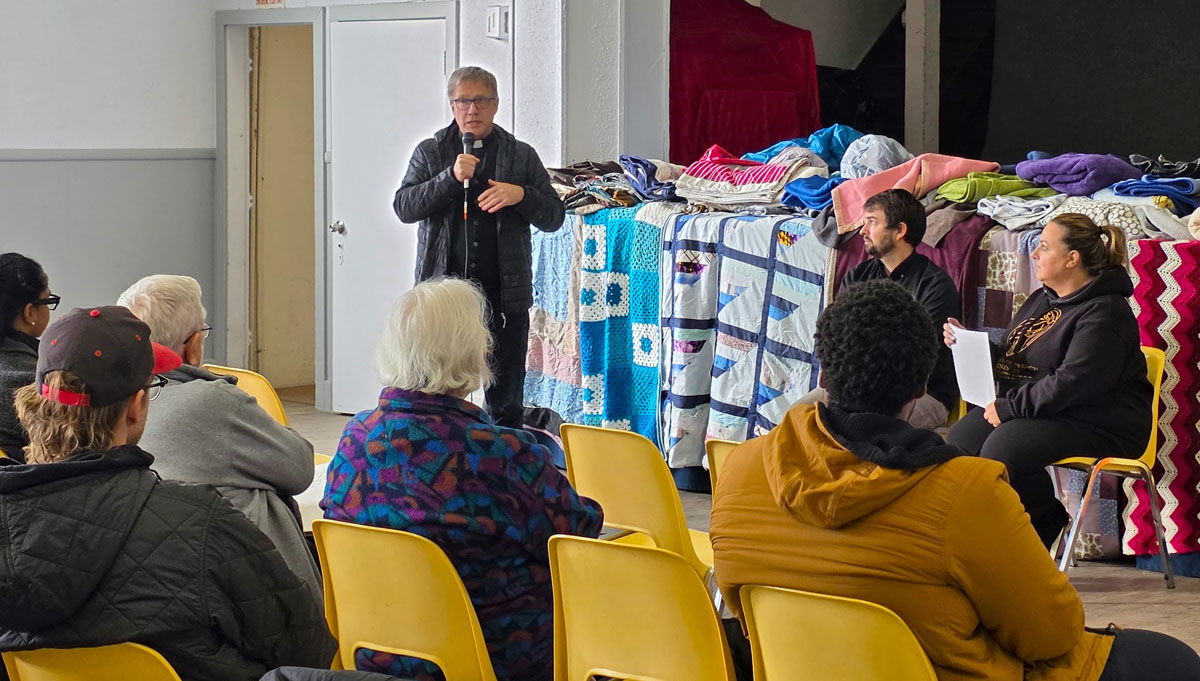
The event was held in the St. Mary Parish Hall, which will once again be the site of an overnight warm-up location this winter for those without shelter. (Photo by Jon Perez, Catholic Saskatoon News)
Nunes described the decision to open St. Mary Parish Hall to people needing a safe place during winter as one that involved serious considerations. The church community had concerns about protecting the historic building and managing financial pressures, and ensuring the space remained safe.
However, conversations with her children helped put those concerns into perspective. Nunes recalled realizing that providing shelter aligned with the church’s purpose, explaining that there was a fear of open doors perhaps putting the church at risk.
“But perhaps the greater risk could have been forgetting why those doors were there in the first place,” added Nunes, underscoring faith communities’ role in responding to urgent human needs.
The winter shelter is operated by the Salvation Army, with various partnerships among church communities and groups contributing time, resources, and expertise. Nunes explained that Salvation Army staff have responsibility for shelter operations, while volunteers from St. Mary Mission and Outreach Ministry provide companionship and additional support.
Volunteer connection and accompaniment
Volunteers may offer those seeking overnight shelter a snack or a drink, take time listen to someone’s experiences, or sit with a person who needs someone to talk to. Nunes said it is an opportunity to acknowledge people, learn their names, and listen to their stories. These interactions can help establish trust, particularly for people who have experienced trauma or isolation.
She also emphasized that the parish ministry extends beyond the winter shelter. During the summer, St. Mary Mission and Outreach Ministry and its community partners served more than 6,000 meals, she reported. Community meals, barbecues and other gatherings gave people in the neighbourhood opportunities to sit together and receive food in a welcoming environment.
The intention was not simply to distribute meals and send people away, but to offer hospitality and build relationships. Nunes explained that these gatherings were designed to provide hospitality, dignity and relationship, demonstrating how basic services can also create opportunities for belonging.
Beyond meals and shelter, the mission supports people through street outreach, clothing donations, emergency supplies, family food hampers and referrals to other services. Nunes described helping people get clothing suited to changing weather, connecting individuals with more permanent shelter, and advocating for people who need help navigating community services.
She also stressed the importance of coordinating with existing organizations so that limited resources are used effectively. The parish does not receive funding specifically for its outreach activities, she said, which means that donations, fundraising and volunteer support are essential to maintaining the work.
Blessings and challenges of the season
David Clare of the Salvation Army offered another perspective on the importance of seasonal outreach, describing winter as a time when people experiencing homelessness may become easier to connect with because they gather in shared spaces. While warmer weather can leave people spread across different parts of the city, winter creates opportunities for interaction and mutual support.
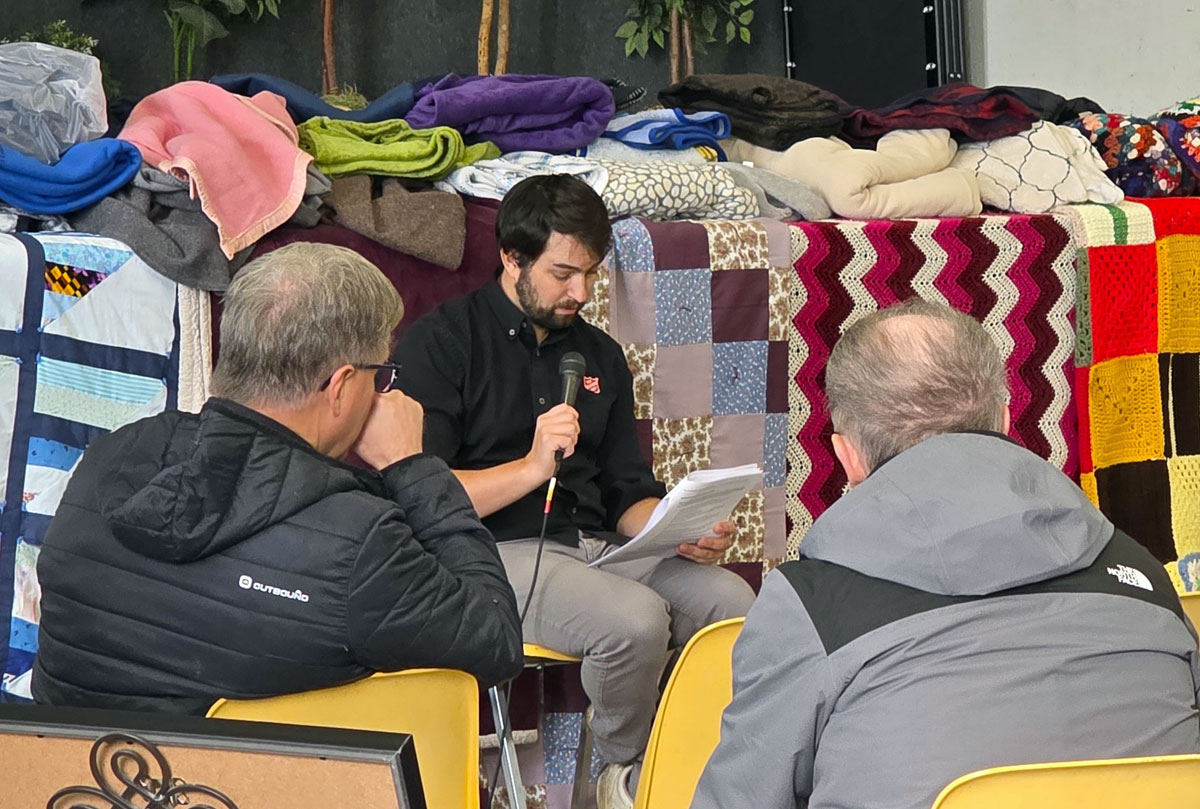
David Clare of the Salvation Army was one of the presenters at the Oct. 24 event. (Photo by Jon Perez, Catholic Saskatoon News)
“In the summer people are spread out all over,” said Clare, adding that the winter season is a unique opportunity to establish relationships that might otherwise be difficult to develop. His comments highlighted the value of outreach that recognizes individuals rather than treating shelters solely as temporary places to sleep.
Preparing for winter also means meeting immediate material needs. Nunes identified blankets, winter jackets, boots, gloves, toques, warm socks and hygiene products as much-needed items.
She said the shelter went through 80 blankets in one week during January, illustrating how quickly supplies can be used when temperatures drop and blankets become wet or dirty. Individually packaged snacks, juice boxes and other emergency provisions are also needed.
Nunes encouraged community members to donate clean blankets and usable winter clothing, while noting that financial contributions can help organizations purchase specific items and respond to changing needs.
She also stressed that community support must be coordinated. Volunteers and donors may have good intentions, but efforts can become less effective when organizations work independently without communicating with groups already providing services. She encouraged residents, businesses, churches and community leaders to consult existing outreach organizations before launching new initiatives.
“True collaboration requires stability,” she said, emphasizing that supporting an established program can sometimes accomplish more than creating a separate project. St. Mary Mission and Outreach Ministry has recruited and trained more than 200 volunteers, according to Nunes, while continuing to seek donations, practical assistance and partnerships to meet growing demands.
Growing in understanding
Parishioner Joshua Opputeh expanded the discussion by focusing on the dignity and identity of people experiencing homelessness. He argued that helping someone begins with understanding that person’s experience, rather than viewing them as a problem to be solved.
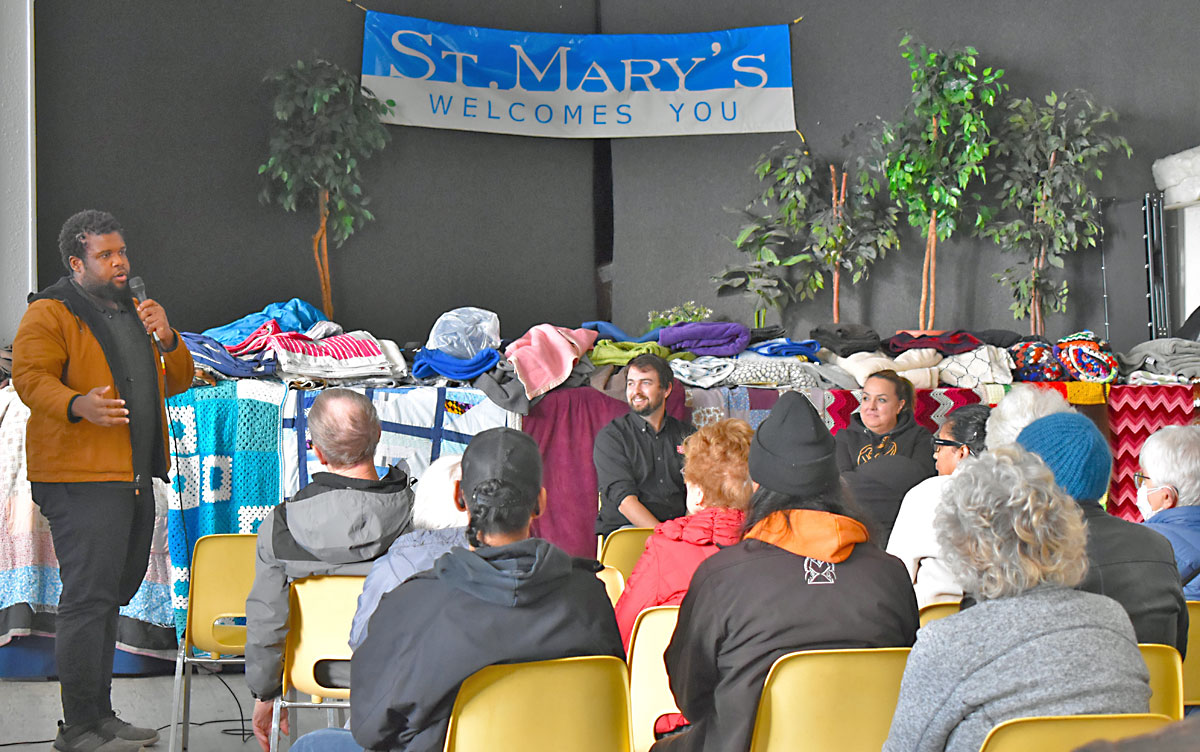
St. Mary Parishioner Joshua Opputeh (left) called for compassion and understanding in outreach to those in need. (Photo by Jon Perez, Catholic Saskatoon News)
“To work in the community, we have to step outside of ourselves and re-enter the reality of another person,” he said. His comments encouraged community members to listen carefully, understand individual circumstances and recognize the humanity of those who need assistance. Compassion, in this view, involves being willing to understand another person’s suffering instead of making decisions based only on outside perceptions.
Opputeh also cautioned that providing housing alone may not be enough to ensure long-term stability. Some people who move into housing continue to face complex challenges, including strained relationships, isolation, and difficulties maintaining their tenancy. He argued that people need ongoing support as they work toward independence, rather than being expected to overcome every obstacle immediately after finding accommodation.
“You don’t expect someone who was in a wheelchair to throw away the crutches and start from a new experience,” he said, using the comparison to illustrate why support must continue while people rebuild their lives. His remarks reinforced the need for housing services to work alongside trained professionals and community-based support programs.
Together, the speakers presented a vision of homelessness response that combines immediate assistance with lasting solutions. Emergency shelter, food, warm clothing and winter outreach can protect people from immediate harm. At the same time, affordable housing, ongoing support, recreation and strong community relationships can help address the broader conditions that contribute to homelessness.
Their discussion called on residents, service organizations, faith communities, businesses and governments to work collaboratively and listen to the people most affected.
As winter approaches in Saskatoon, the central message was clear: helping people experiencing homelessness means more than providing temporary relief. It means recognizing their dignity, responding to their individual needs and building a community in which everyone has a genuine opportunity to find safety, stability and belonging.

Displays by community groups ad helping organizations in the inner city were part of the Oct. 24 event. (Photo by Jon Perez, Catholic Saskatoon News)

The event included presentations, and an information fair. (Photo by Jon Perez, Catholic Saskatoon News)

The Mustard Seed recently expanded its ministry to Saskatoon. (Photo by Jon Perez, Catholic Saskatoon News)
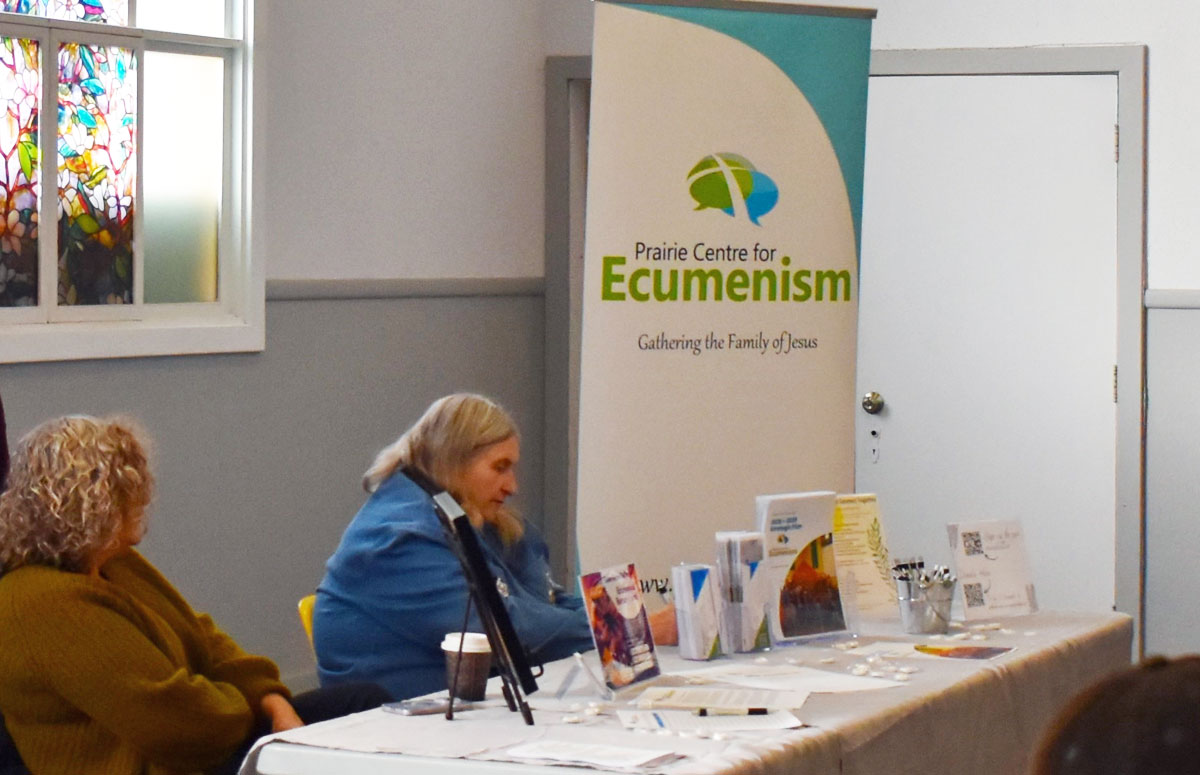
The Prairie Centre for Ecumenism organized the event, co-hosted with the Inner City Council of Churches. (Photo by Jon Perez, Catholic Saskatoon News)
-30-
Jon Perez is a parishioner at the Cathedral of the Holy Family in Saskatoon and a member of the St. Cecilia Choir. Catholic Saskatoon News is supported by gifts to the Bishop’s Annual Appeal: dscf.ca.