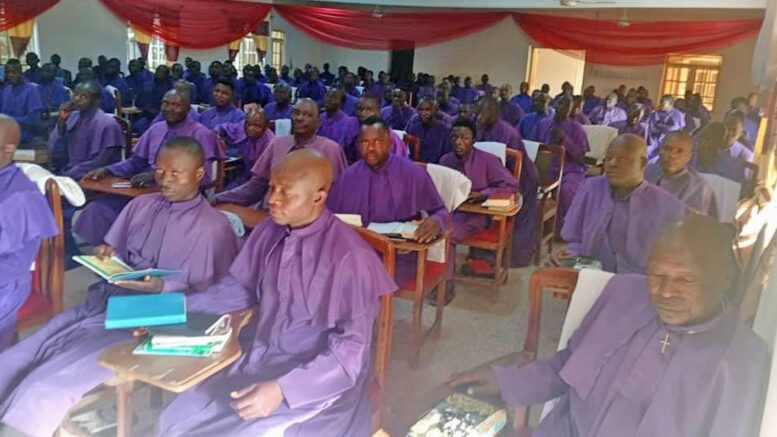
By Fr. Joseph Salihu, Diocesan Director for the Pontifical Mission Societies, RCDOS
In the month of October, the Universal Church invites us to turn our thoughts and hearts in a special way toward the world beyond our borders and to remember the missionary work already being carried out, as well as the work that remains to be done in mission territories.
For many years, the Church in Canada, and particularly here in Saskatoon, has rolled up its sleeves and actively supported missionary work around the world.
This year marks the 100th anniversary of World Mission Sunday, which raises awareness and support for the Pontifical Mission Societies.
The missionary work of the Roman Catholic Diocese of Saskatoon has primarily evolved in two waves:
- The first wave, initiated in the context of the Second Vatican Council and concluding in 2014, focused on five cities in Northeastern Brazil and relied exclusively on diocesan personnel and funds.
- The second wave, prompted by a present-day shortage of priests, involves partnerships between the diocese and dioceses or religious congregations in Africa and Asia.
The Brazil Mission: Fifty Years of Service
At Vatican II, Pope John XXIII urged the Church to be present in the world, while his successor, Pope Paul VI, addressed the disparities between rich and poor nations.
These appeals took concrete form when Archbishop Adelmo Machado of Maceió, Brazil, met with Bishop Francis Klein of Saskatoon and Abbot Jerome Weber, OSU, of St. Peter’s Abbey, describing the challenges facing his South American diocese.
The encounter inspired the local bishop and abbot to deepen their missionary commitment, leading to the establishment of their missions in northeastern Brazil. And so Canadian missionaries from this part of Saskatchewan departed to serve in São José da Laje, Ibateguara, União dos Palmares, Marechal Deodoro, and Maceió.
The pioneering team of missionaries in 1964 consisted of three diocesan priests, Fr. Don Macgilivray, Fr. Bernard Duun, and Fr. Bob Ogle, as well as two lay nurses, Ida Raiche and Cecile Poilievre.
In 1967, St. Peter’s Abbacy followed suit, sending two priests to Brazil to begin with: Alvin Hergott and Fr. Sylvester Vredegoor, OSB.
Over the next 50 years, 31 missionaries from Saskatchewan served in northeastern Brazil. Those sent by our diocese included members of the Sisters of Zion, the Ursulines, the Elizabethan Sisters of St. Francis, the Sisters of Notre Dame d’Auvergne, and the Sisters of Mission Service.
When the abbacy joined the diocese of Saskatoon in 1998, the two missions were integrated into a single diocesan effort.
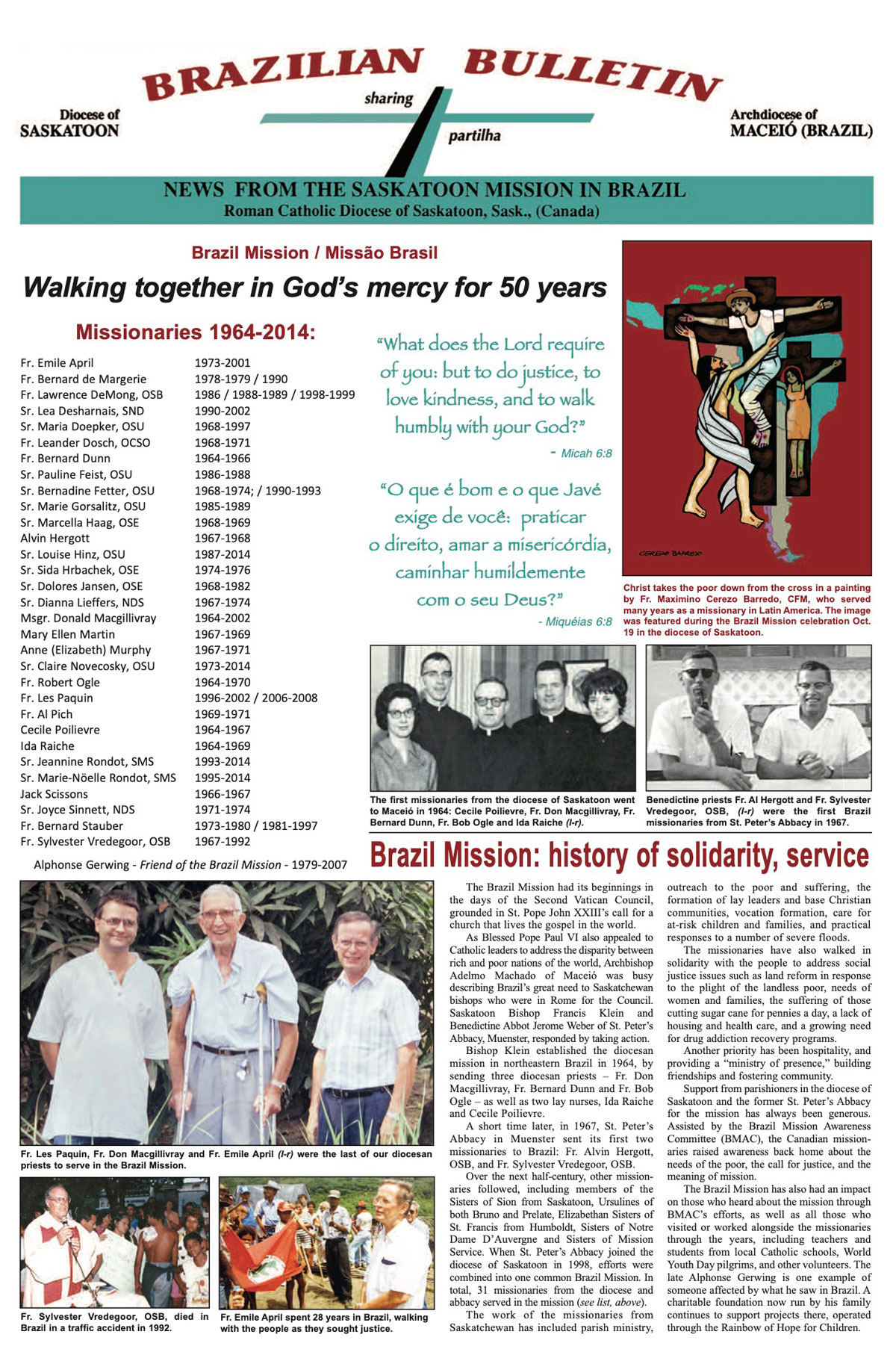
The final edition of the Brazilian Bulletin in 2014 summarized the history of the Brazil Mission in both St. Peter’s Abbacy and the Roman Catholic Diocese of Saskatoon. The Brazilian Bulletin was produced regularly for many years by the Brazil Mission Awareness Committee, to raise awareness about the missionary outreach underway in Brazil for some 50 years. (Diocesan Newsletter Fall 2014, The Roman Catholic Diocese of Saskatoon)
The missionaries’ variety of apostolates reflected the diversity of their ministry. They provided parish ministry, promoted social justice and lay formation, supported Basic Christian Communities, and worked in family services, housing, and healthcare. They also fostered friendship and strengthened local communities. At its heart, the mission was one of presence: accompanying people, building relationships, and serving alongside them.
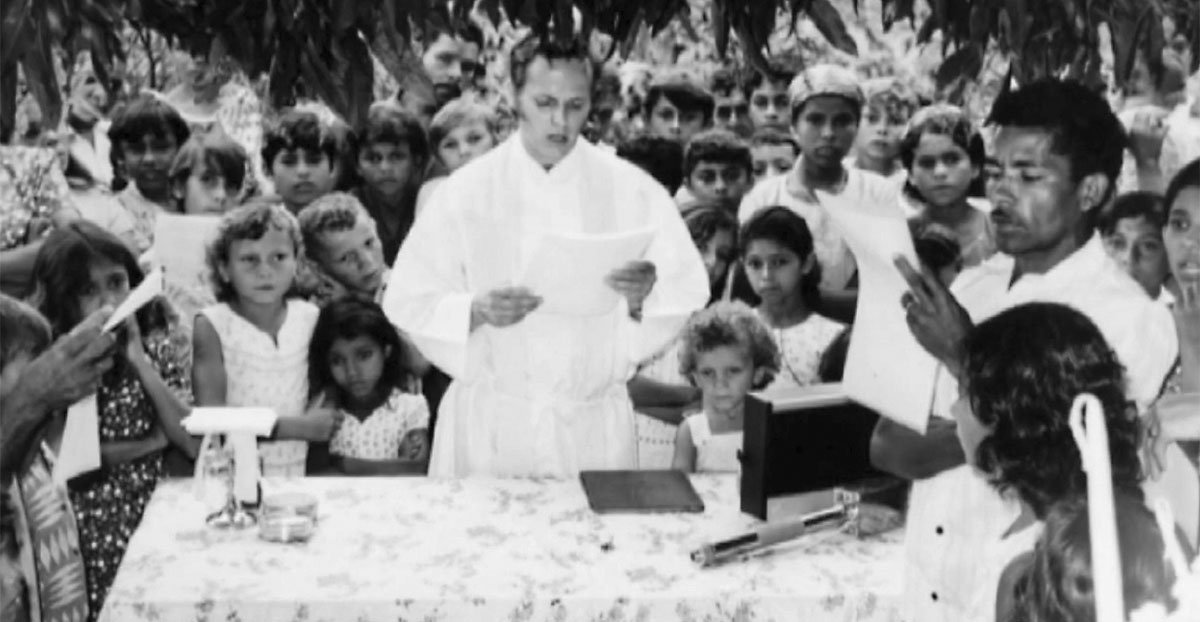
Fr. Emile April of the Roman Catholic Diocese of Saskatoon, who served in the diocesan Brazil Mission for some 28 years, celebrates a liturgy during his time in Maceió. (Brazil Mission Awareness Committee file photo)
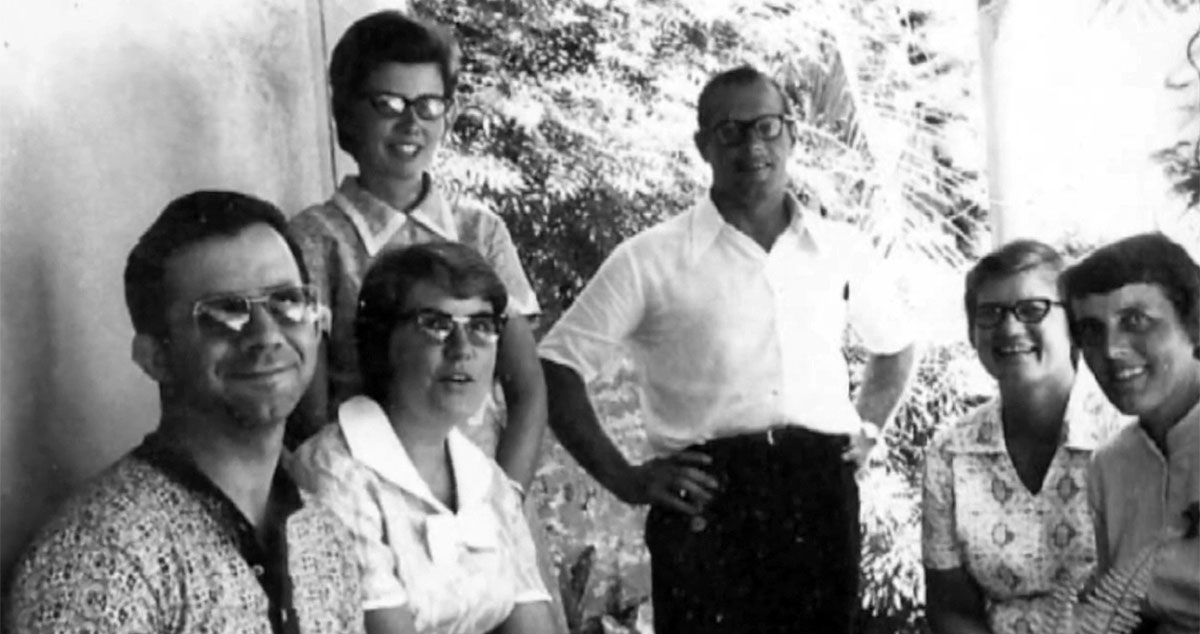
Missionaries from the former St. Peter’s Abbacy, serving in Brazil included Fr. Sylvester Vredegoor, OSB (standing in the centre), who died in an accident there in 1992. (Brazil Mission Awareness Committee file photo)
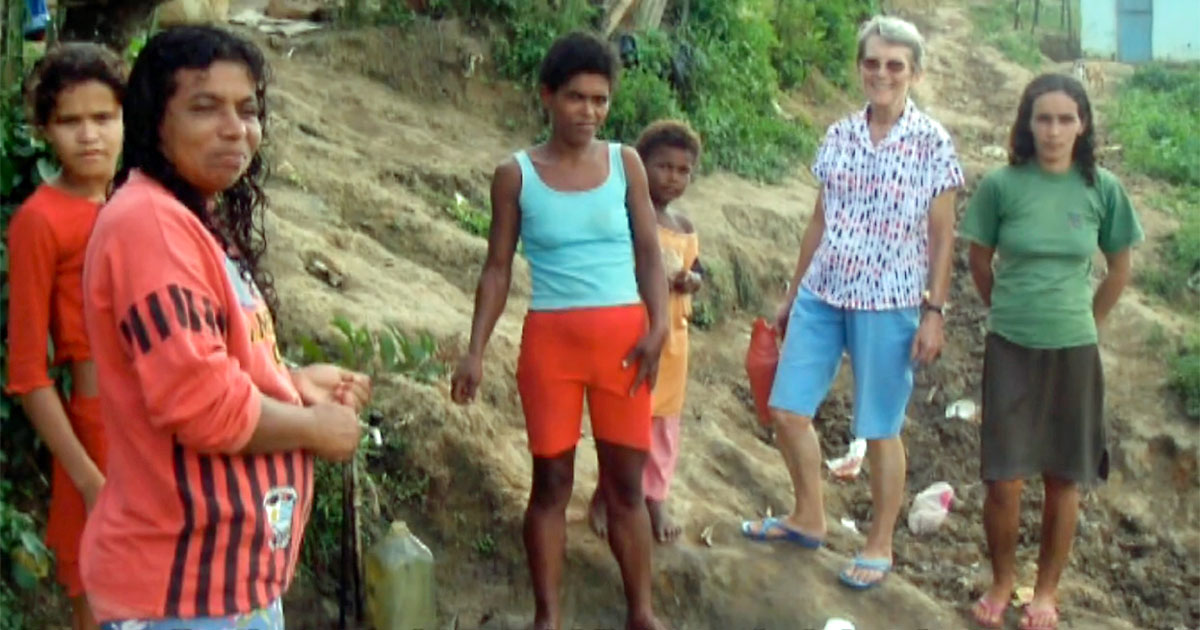
Diocesan missionary Sr. Jeannine Rondot, SMS, on a Brazilian hillside with women collecting water. (Brazil Mission Awareness Committee file photo)
To support the missionaries’ work, volunteers on the Brazilian Mission Awareness Committee (BMAC) highlighted the mission and kept it in view for parishioners in the pews. Its efforts inspired laypeople to work directly alongside the missionaries and raise funds for their projects. The missionaries’ personal testimonies also helped parishioners connect with the needs of the communities they served.
The diocesan Brazil Mission concluded in 2014, and the last four religious sisters returned to Saskatoon: Sr. Louise Hinz, OSU; Sr. Jeanine Rondot, SMS; Sr. Claire Novecosky, OSU; and Sr. Marie-Nöelle Rondot, SMS.
Bishop Don Bolen, then bishop of Saskatoon, described the mission as a worthwhile endeavour and thanked the missionaries for their service on behalf of the diocese. This description captured Bishop Francis Klein’s vision: the mission belonged to the entire Church, on whose behalf the missionaries served.
From Brazil to a wider mission
The Brazil Mission was sustained by missionaries and funds from Saskatoon, and the Church was undoubtedly blessed by a general increase in missionary awareness.
Mission work has continued in various ways, including an annual Diocesan Mission Works collection in November with a focus on northern missionary dioceses and short-term mission and outreach trips, as well as the annual World Mission Sunday awareness campaigns and collections supporting both global and local mission initiatives.

Saskatoon Bishop Mark Hagemoen and Bishop Jon Hansen of the Diocese of Mackenzie-Fort Smith celebrated Mass at Deline, NWT, as part of an annual Sacred Gathering in August. Saskatoon’s bishop was joined by three young adults on a summer mission trip to the northern diocese. Northern dioceses are also supported by a Diocesan Mission Works collection held each November in the diocese of Saskatoon. (Submitted photo)
Another major transformation also seems to have sparked a second wave of missionary activity.
The shortage of vocations created a new dynamic: the Roman Catholic Diocese of Saskatoon, under the leadership of former Bishop Albert LeGatt, began relying on Fidei Donum priests — diocesan priests serving outside their home dioceses — particularly from Asia and Africa to serve parishes here.
Their missionary presence here has deepened the diocese’s understanding of the realities in their countries of origin and fostered new partnerships. Parishes, especially those served by these priests, began supporting projects in their home countries.
The diocese also began receiving requests for mission appeals from other dioceses.
In response, Bishop Mark Hagemoen has now established a mission office, appointing myself (Fr. Joseph Salihu, pastor of Holy Spirit Parish in Saskatoon) as mission delegate to coordinate these appeals.
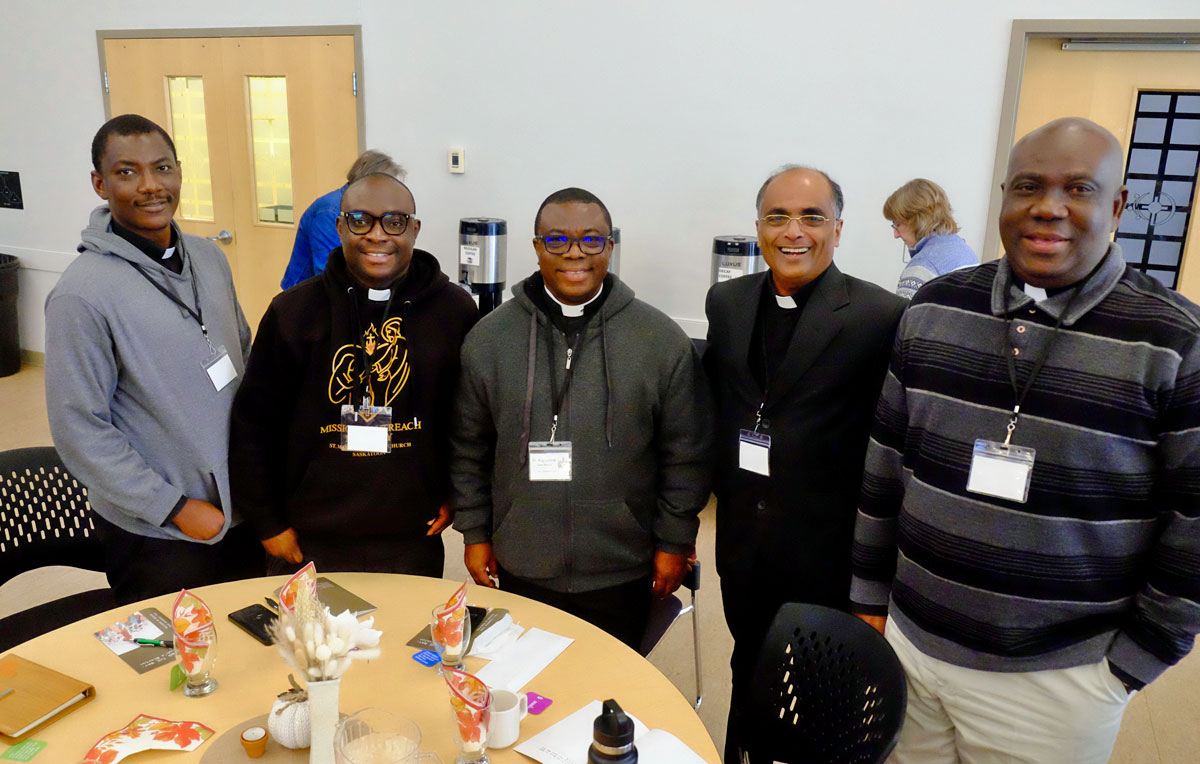
A few of the “Fidei Donum” priests serving today in the Roman Catholic Diocese of Saskatoon, photographed at a diocesan Fall Congress Oct. 14. The presence of priests from countries aroud the world has brought a new wave of missionary activity to the diocese. (Photo by Kiply Luka Yaworski, Catholic Saskatoon News)
The mission office developed procedures to ensure compliance with Canada Revenue Agency (CRA) requirements, including the selection of eligible non-designated beneficiaries whose projects aligned with the Church’s mission to propagate the faith. It set the necessary parameters to ensure that the collection, disbursement, and reporting of funds met CRA audit requirements. With these procedures in place, the diocese began collecting funds in 2026 to support missionary activities abroad.
The Brazil Mission was an intensive, focused, and sustained commitment in a specific region. This second wave of missionary activity is more widely dispersed, reaching communities across different geographical locations. Yet both reflect the same enduring desire to bring Christ’s saving message to people around the world.
Several dioceses, particularly in Nigeria and Ghana, were approved this year for mission appeals based on their existing relationships with Saskatoon, having sent priests to serve in this Canadian diocese.
Despite having their own local needs, our parishes were moved to support the needs of sister churches abroad. Their generosity demonstrates that the missionary spirit is alive in Saskatoon.
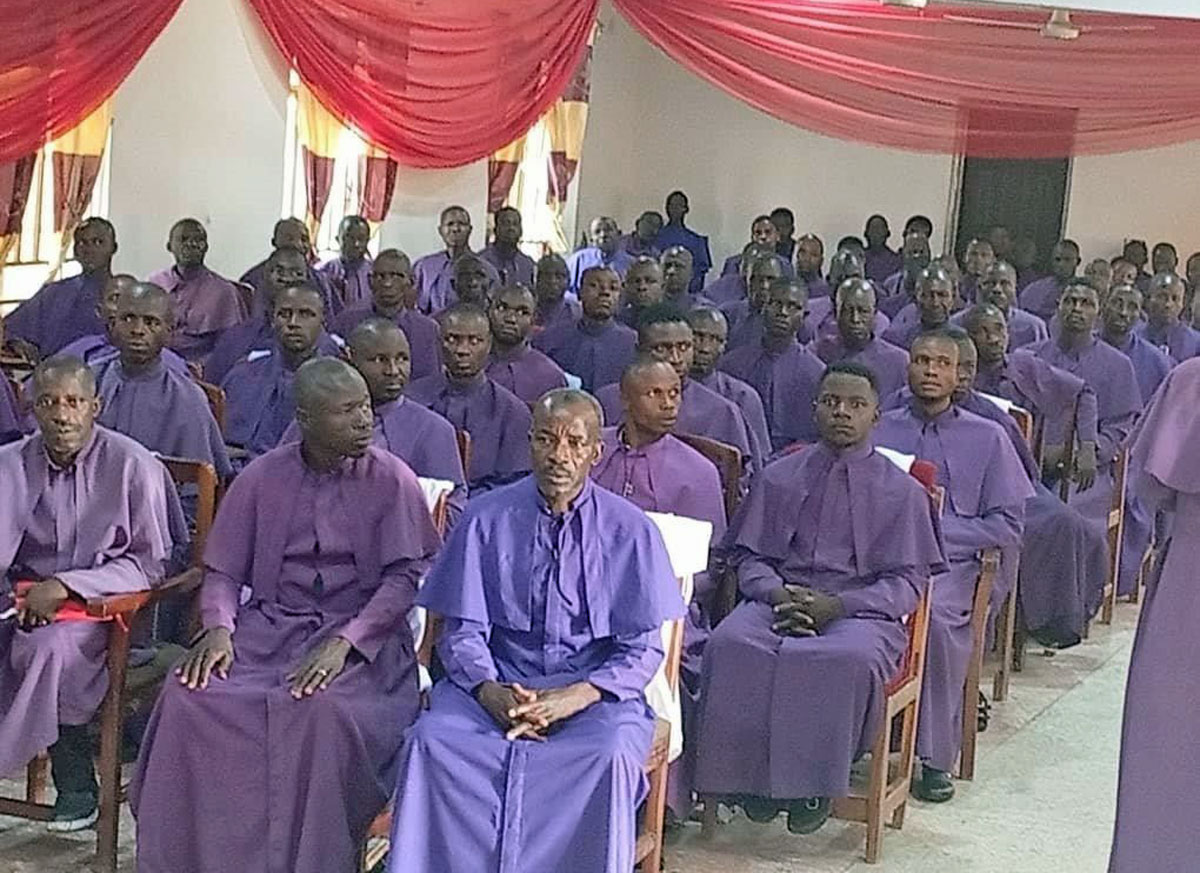
Catechists of the Kafanchan Diocese in northern Nigeria will use motorbikes in their ministry, purchased with the help of donations raised earlier this year at Holy Spirit Parish in Saskatoon. (Submitted photo courtesy of Fr. Joseph Salihu)
World Mission Sunday: A century of faith in action
Throughout the years, the Roman Catholic Diocese of Saskatoon has remained attentive to the needs of churches beyond its borders, responding consistently with generosity. By its various missionary initiatives, the diocese continues to support the universal mission of the Church while fostering solidarity with dioceses and religious congregations around the world.
This missionary spirit lies at the heart of October, Mission Month, when the Church invites us to reflect on the missionary nature of the Church and of every baptized person, to pray for missionaries, and embrace the joy of being missionary disciples wherever we are.
On Sunday, Oct. 18, 2026, we celebrate the 100th anniversary of World Mission Sunday, a day of prayer and almsgiving in support of missionary work around the world. Through the special collection held in Catholic parishes, the faithful help sustain mission projects and communities in need.
Let us join in prayer and give generously, so that the Gospel may continue to reach communities around the world. To learn more or to donate visit the Pontifical Mission Societies of Canada at missionsocieties.ca.
-30-
Catholic Saskatoon News is supported by gifts to the Bishop’s Annual Appeal: dscf.ca/baa