By Kiply Lukan Yaworski, Catholic Saskatoon News
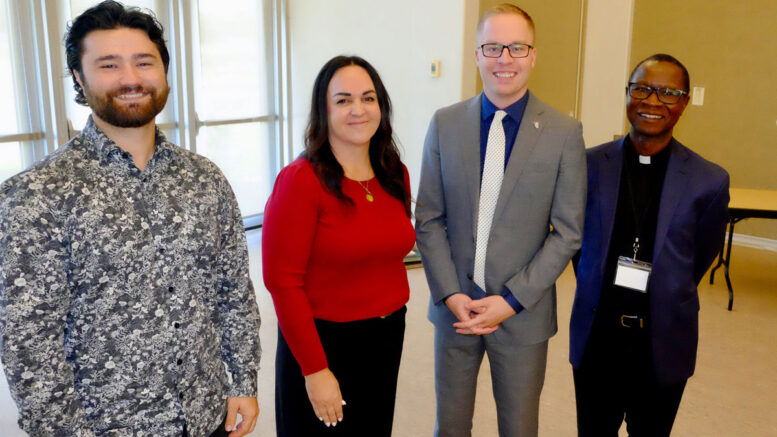
A Synod Implementation Committee introduced next steps for synodality in the Roman Catholic Diocese of Saskatoon at an annual Administration Day Sept. 17, held to launch the new ministry year.
RELATED: Administration Day highlights ministries and priorities – ARTICLE
In response to Pope Leo XIV’s call for all dioceses across the world to implement the Synod on Synodality’s Final Document “For a Synodal Church: Communion, Participation, Mission,” the diocesan Synod Implementation Committee established by Bishop Hagemoen has developed an online discernment tool to assist parishes in moving forward with synodality as it relates to priorities in the diocesan Pastoral Plan.
“We are not dealing with two separate plans,” the bishop assured parish representatives. “We will bring the significant lens of synod implementation into our diocesan reality as it has developed over the last several years.”
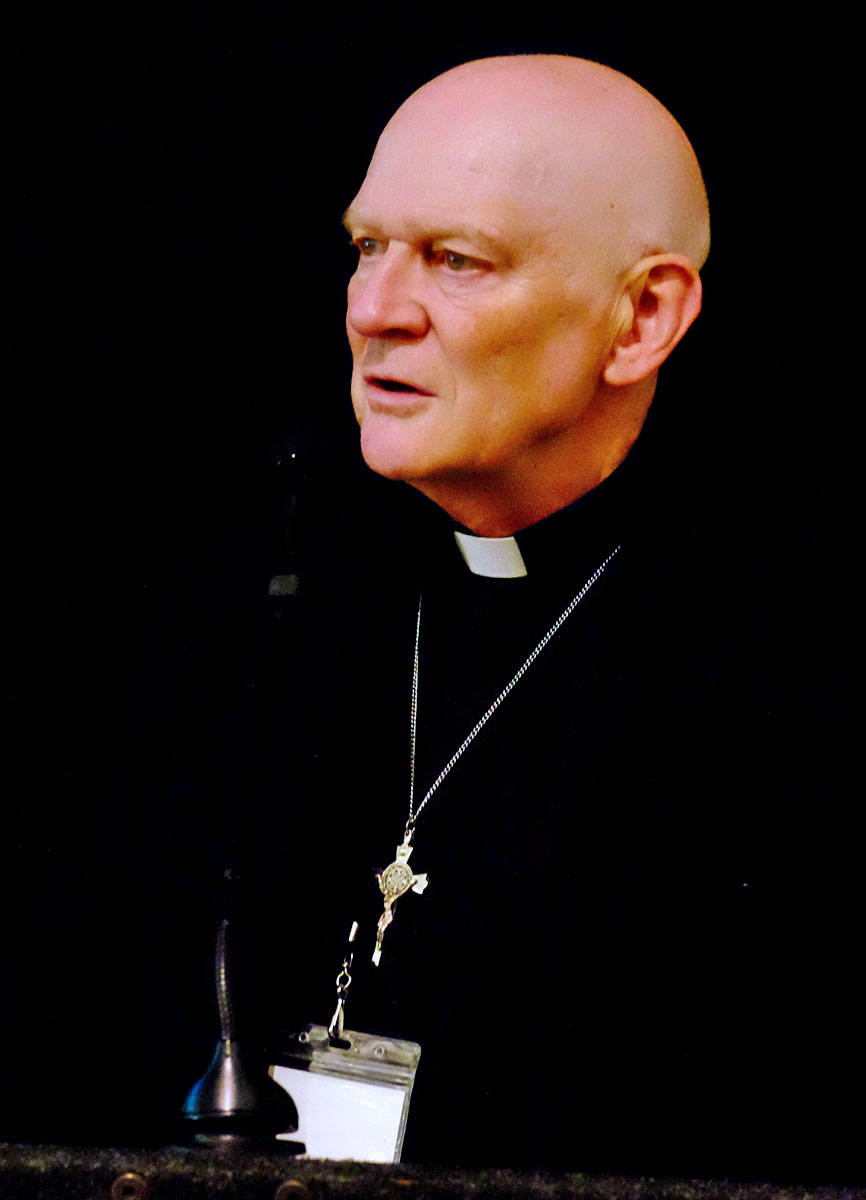
At this year’s Administration Day, Saskatoon Bishop Mark Hagemoen provided an overview about synod implementation in the diocese. (Photo by Kiply Lukan Yaworski, Catholic Saskatoon News)
Committee members presented a new online Parish Reflection Tool that has been adapted from an earlier evaluation survey for the Diocesan Pastoral Plan, launched in the diocese in 2019.
The 36 survey questions address the six pillars or priorities of the Pastoral Plan, which include drawing people into deeper intimacy with the Lord, making every Sunday matter, discerning God’s call for each person to share in the mission and life of the Lord (“embrace your priesthood”), building and supporting family and community, promoting the healing journey in the Lord, and moving from maintenance to mission.
The themes from the Synod on Synodality — “communion, participation, mission” — are also strongly tied to the goals and priorities of the Diocesan Pastoral Plan, noted committee member Cameron Choquette, St. Thomas More (STM) College Secretary & Director of Strategic Initiatives.
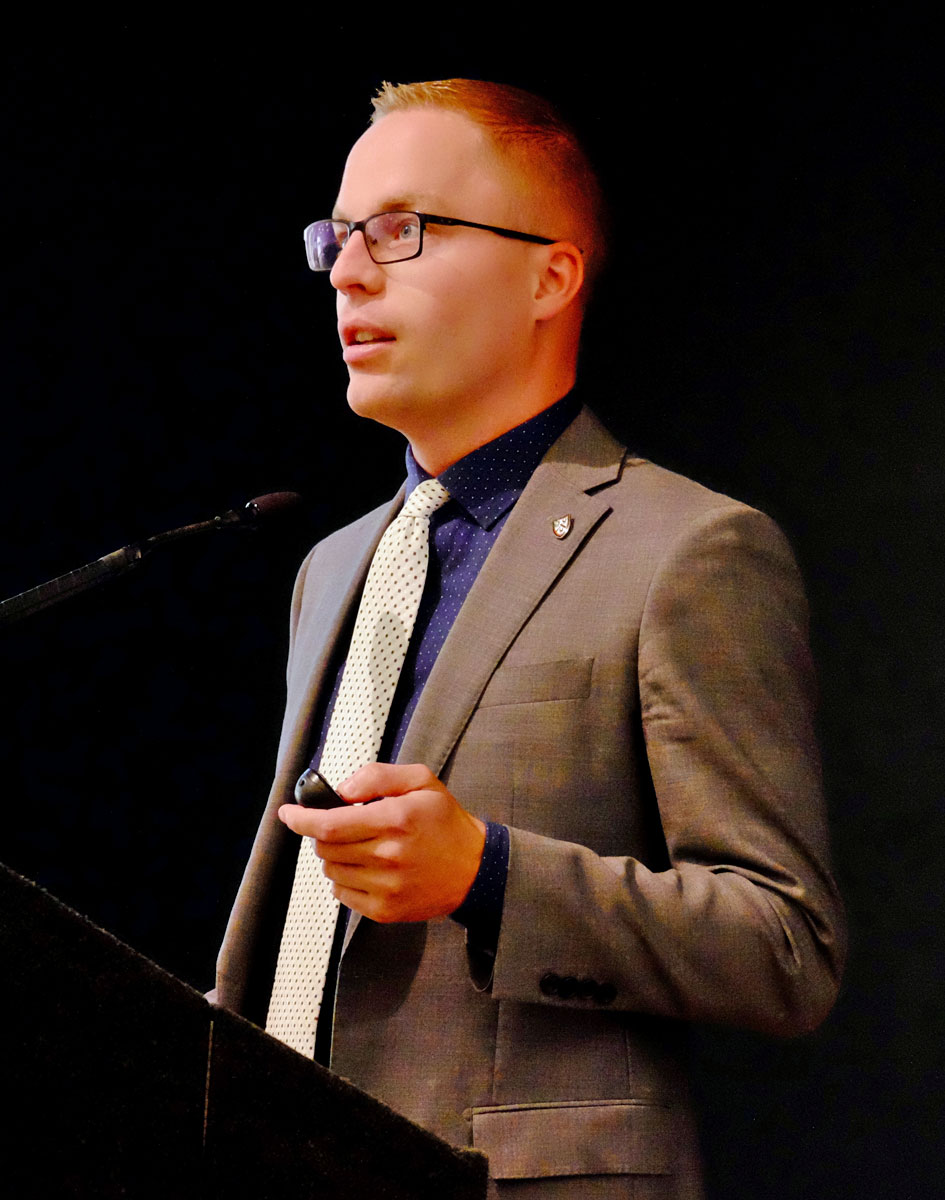
Cameron Choquette of the Synod Implementation Committee described next steps for parishes in implementing synodality. (Photo by Kiply Lukan Yaworski, Catholic Saskatoon News)
Once launched, the Parish Reflection Tool will electronically collect and collate feedback and reflection from parishioners to help leaders listen to perspectives in a synodal spirit, and to assist in discernment, in order to make informed choices about pursuing priorities of the Pastoral Plan, he described.
“This is about discernment,” said Choquette, noting that it can be difficult for parish council members to understand where they stand in the context of a large diocesan pastoral plan.
“Where do we fit? What do we want to focus on? This discernment tool provides a mechanism for each council member to reflect on those answers that are gathered, so that your council can debrief, and then identify what you might want to spend your time on in the Pastoral Plan,” he said.
The online-only tool will keep e-mails and comments private, while at the same time providing summaries, statistics and analysis, explained implementation committee member Jacob Powell, a Bruno-based business owner, who has previously served as a parish coordinator of youth ministry.
Projecting a walk-through of the online process, Powell explained that after participants complete the survey, the parish dashboard will provide weighted scores for questions related to each priority, and will suggest two Pastoral Plan priorities to focus on, while also giving information about the range of perspectives in the parish – which may serve as a good place to begin conversations about next steps.
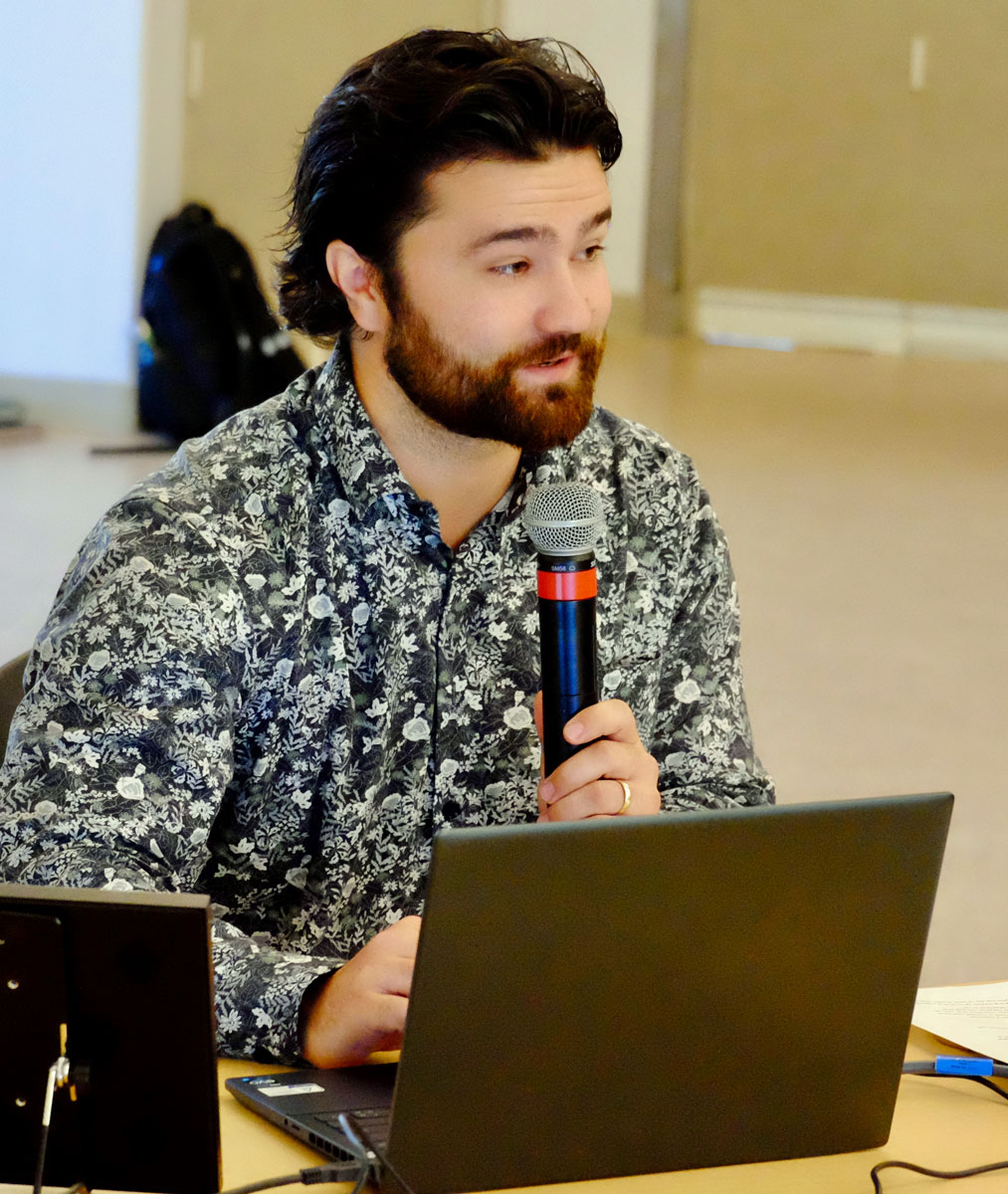
Jacob Powell of the Synod Implementation Committee introduces an upcoming online tool to assist parishes in discerning next steps for pursuing priorities in the Diocesan Pastoral Plan in a synodal way. (Photo by Kiply Lukan Yaworski, Catholic Saskatoon News)
“This isn’t like a report card or anything. It’s actually meant to help leadership and admin at the parish level, as well as the pastoral council members, to have conversations about participation, about community, about mission, and what can you do at the parish level,” Powell said.
Examples of parish discernment and action
Committee members said that the results obtained through the online surveys will include a “playbook” of stories and examples from parishes across the diocese.
This “playbook” is envisioned as a living resource of best practices, based on real parish stories, grounded in the needs of the people, to assist in recognizing the synodality that is already happening.
To illustrate this model, representatives of St. Mary Parish in Saskatoon and Little Flower Parish in Leader, SK, presented testimony about the discernment that went into initiatives in each parish, and their impact.
An urban parish opens its doors
St. Mary pastor Fr. Kevin McGee walked through the challenging parish discernment process undertaken four years ago, after the parish was approached about opening their hall as an overnight winter warm-up location to those without housing.
An Ignation discernment process was undertaken with the community, working at the “attitudes” needed to fully engage the question. “One attitude that we hope is led by the Spirit, is an openness, which involves putting aside our own preferences, desires, preconceptions, judgments… that’s not easy to do,” said McGee. “What is the Lord maybe asking us to let go of, to create a space for new options, new possibilities, new beginnings?” Other critical elements in the discernment process include fostering a generosity of heart, a spirit of respect, and relying on prayer throughout.”
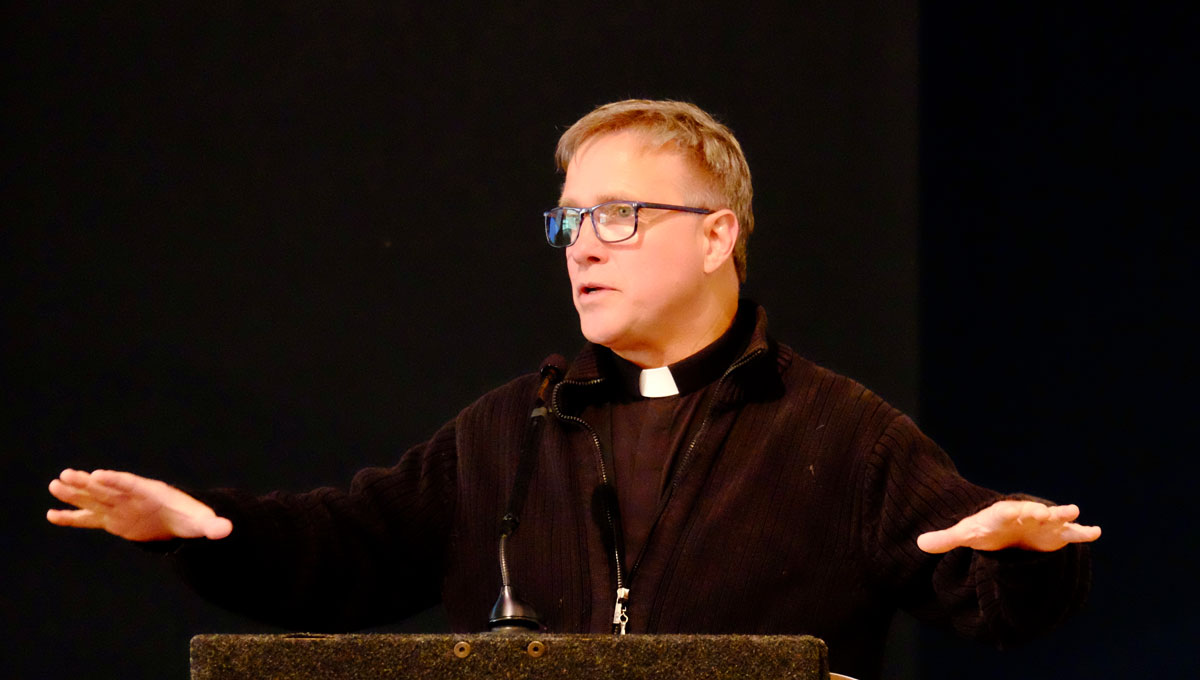
The discernment process undertaken by St. Mary Parish in Saskatoon to decide whether to make their hall available as an overnight warm-up location was described by St. Mary pastor Fr. Kevin McGee during an Administration Day presentation on synodality. (Photo by Kiply Lukan Yaworski, Catholic Saskatoon News)
“We looked at what would give glory to God,” said McGee. “That is again leaning into the wisdom of our church, and I would suggest that is also true in the synodal process.”
After much discussion, the parish was ultimately called to trust God and make a decision, choosing to go ahead with opening the hall during the winter month to those without overnight shelter.
“There was a lot of anguish and pain,” he admitted. “But wanted this decision to be informed by a serious practice and discipline of prayer.”
With St. Mary Parish now moving into the fourth year of offering its hall for an emergency overnight warm-up location, operated by the Salvation Army, the decision has proven to be “a good fit,” McGee related. “The Holy Spirit has embraced us in this,” he said. “It has really touched the hearts of many people.”
The decision to open the hall on the cold nights of winter has also brought about an increase in the parish’s outreach in the neighbourhood year-round, with the formal establishment of St. Mary Mission and Outreach Ministry, funded entirely by donations..
Coordinator Jennifer Nunes spoke about the challenges of the discernment process about opening the hall, which was undertaken when she was serving on parish council, describing her personal struggles with the ideas, until she eventually consulted her children, who quickly and clearly distilled the question down to what Jesus would want.

St. Mary Mission and Outreach Coordinator Jennifer Nunes described the impact of the Saskatoon parish’s decision to permit its hall to be used as on overnight winter warming location for those without shelter. (Photo by Kiply Lukan Yaworski, Catholic Saskatoon News)
Nunes described the impact of what has followed since the parish said yes to opening the hall — including lives saved, relationships built, new initiatives undertaken, partnerships strengthened, and volunteers mentored.
“Look at what God has done with St. Mary’s yes. This past winter, our warm-up location at St. Mary’s Hall was open for 148 nights, with over 15,000 overnight check-ins from over 1,000 individual men, and more than 200 trained volunteers from St. Mary’s and parishioners from across our diocese and other Christian communities and beyond,” she said.
“For the first time, through our new outreach ministry, volunteers were inside the hall night after night. While Salvation Army staff carried the enormous responsibility of running the shelter, our volunteers could simply sit with the men, learn their names, hear their stories, laugh, listen, and remind them that they were seen, mattered, and loved.”
Nunes added: “To date, this ministry has operated without a dedicated source of funding. It has been carried by people who see the need, believe in the mission, and trust St. Mary’s with what they give, trusting us to turn that generosity into meaningful change”
The result has been transformational, she said. “We were afraid of what might happen if St. Mary’s opened its doors. But in a moment when it would have been easier to close them, God asked us to open them wider, and when we did, He opened doors we could never have imagined.”
A rural parish identifies a need and responds
Fr. Prince Owusu Sarpong then described steps that led to the creation of an Evangelization Committee at Little Flower Parish in Leader, SK, and the ideas and projects that have grown from that local committee’s discernment.
“Today, I share with you based on the themes and the pillars of synodality — communion, participation, and mission. As a parish, we believe in all these three things. Synod means to listen. We began to listen. We gathered information,” he described.
That discernment about greatest needs prompted the creation of an Evangelization Committee – “and that was a game changer,” said Prince. “We listened to each other, and that Evangelization Committee came up with ideas on how to manage the parish and ideas for bringing people back to the churches.”
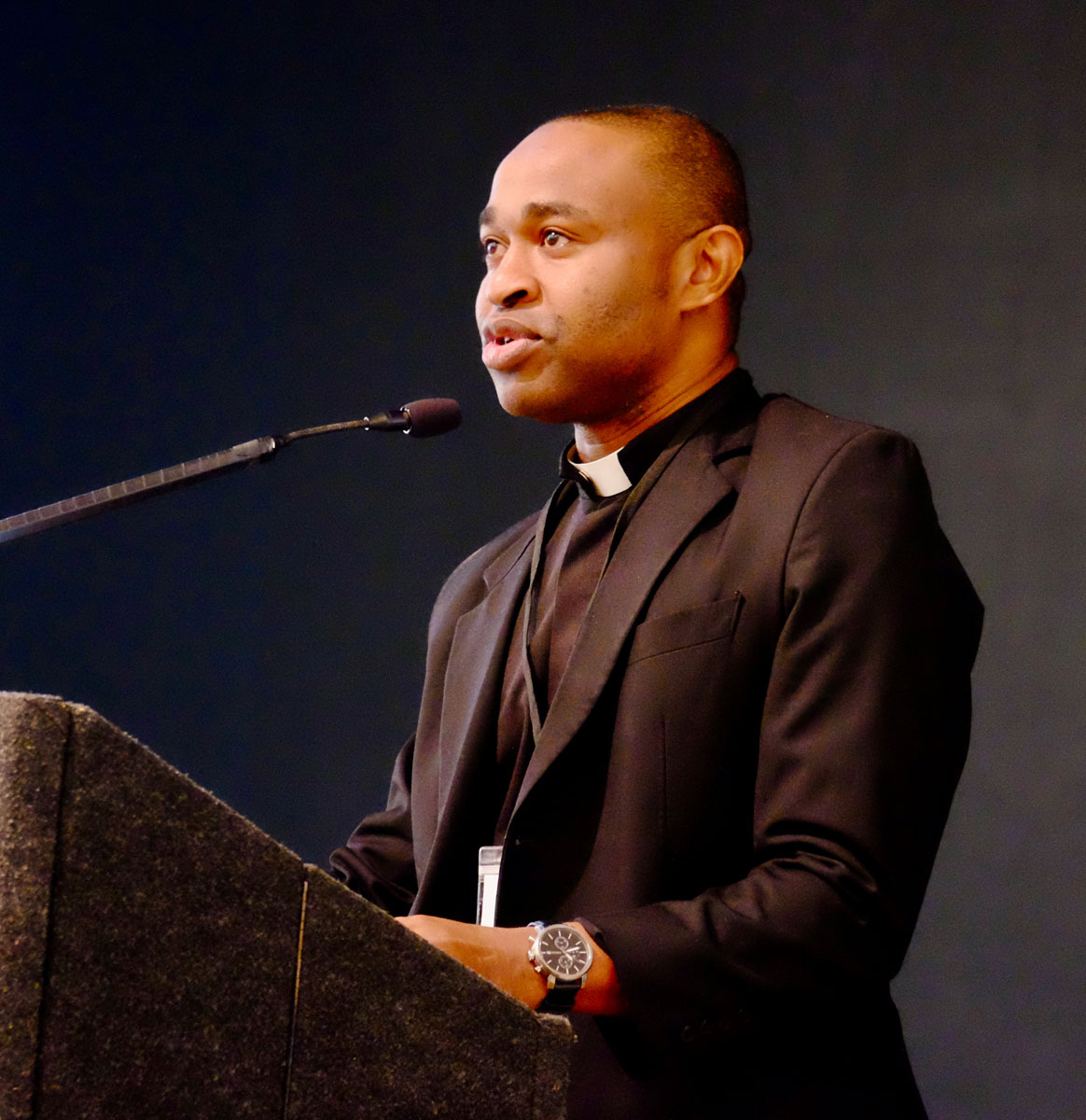
Fr. Prince Sarpong, pastor of parishes at Leader, Fox Valley, Liebenthal and Richmound, SK, described the discernment that led to establishment of a youth evangelization committee at Little Flower Parish. (Photo by Kiply Lukan Yaworski, Catholic Saskatoon News)
A range of initiatives have been launched since then, many focused on children and youth, including a “rake and run” service project; a “Little Flour Bakers” element of catechism classes, in which children make treats for the parish to share; a soccer challenge; collections for the local food bank; and the hosting a multi-cultural night where long-time residents and newcomers come together to share their traditions. “We began to build a community.”
Each week there is a Wednesday children’s choir practice to prepare some of the songs for the following Sunday, and once a month there is a youth mass where the children provide all the ministries, Sarpong said. “And after the Mass we go to the hall to share what they have baked on Wednesday.”
Online outreach is also underway, with the establishment of a “Sip of His Word” live-stream broadcast on YouTube that has had up to 6,000 viewers from across the world joining in sharing the word of God, meditating and praying together.
Prince ended his presentation by expressing a hope that synodality “will not just be a one-day event, but a continual process.”
Commitment to walking together
These examples from the urban parish of St. Mary’s and the rural parish of Little Flower differ in context, but the commitment to walking together is identical, noted the synod implementation committee.
“While the realities may differ, the invitation is the same. God calls each of us to journey together, shoulder to shoulder, and side-by-side,” said implementation committee member Renee Cratty, who has worked for some 14 years at Greater Saskatoon Catholic Schools, and presently serves as principal of St. Kateri Tekakwitha School in Saskatoon.

Renee Cratty of the Synod Implementation Committee highlighted the listening, prayer, accompaniment, trust, and relationship that underlies synodality. (Photo by Kiply Lukan Yaworski, Catholic Saskatoon News)
“This comes from a place of encouragement and support,” stressed Cratty. “Each parish represented here has gifts, strengths, and stories of faithfulness worth celebrating. It is a-about recognizing where the Holy Spirit is already at work and discerning how we continue to grow together.”
Synodality happens whenever people are invited into mission, communion, and participation, she said. “And we all have gifts. When we listen to the Holy Spirit and respond to the nudges placed in our heart, God often opens doors we could not have imagined ourselves.”
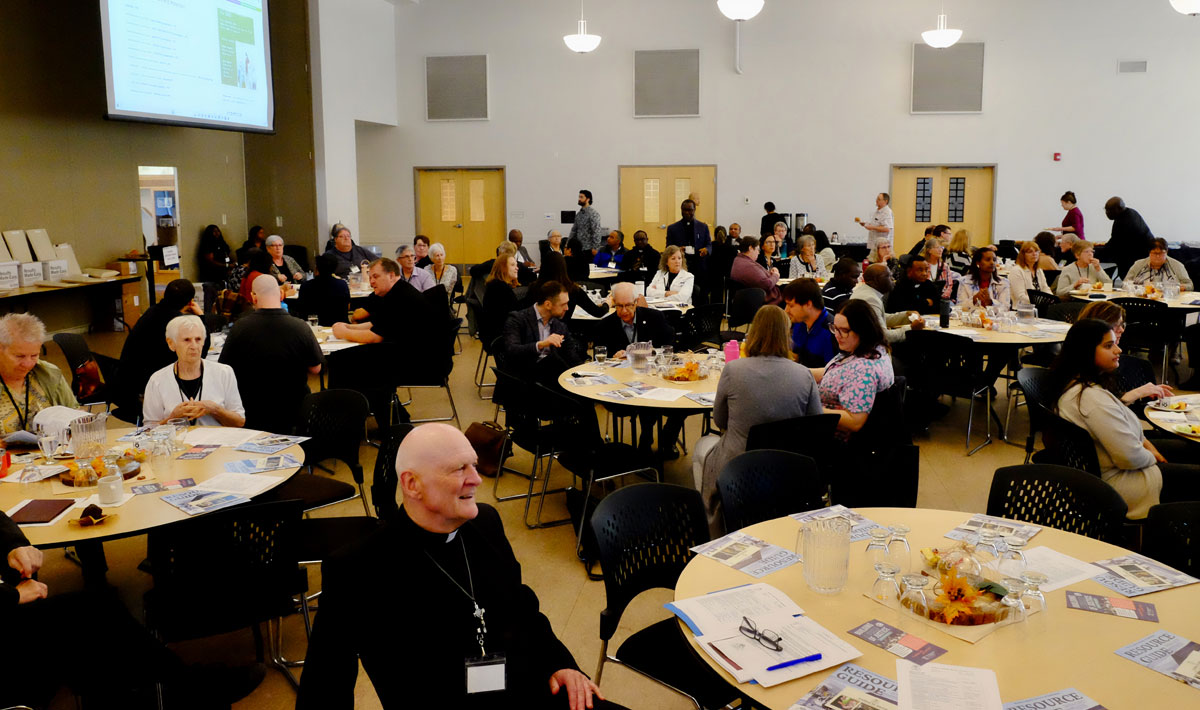
Administration Day 2026 was held Sept. 17 in the Roman Catholic Diocese of Saskatoon, including a discussion about next steps for implementation of the Synod on Synodality. (Photo by Kiply Lukan Yaworski, Catholic Saskatoon News)
Timeline and next steps
After time for discussion, Synod Committee Chair Fr. Joseph Salihu, pastor at Holy Spirit Parish, Saskatoon, and the Bishop’s Delegate for Ecumenism, provided an overview of the next steps in the process.
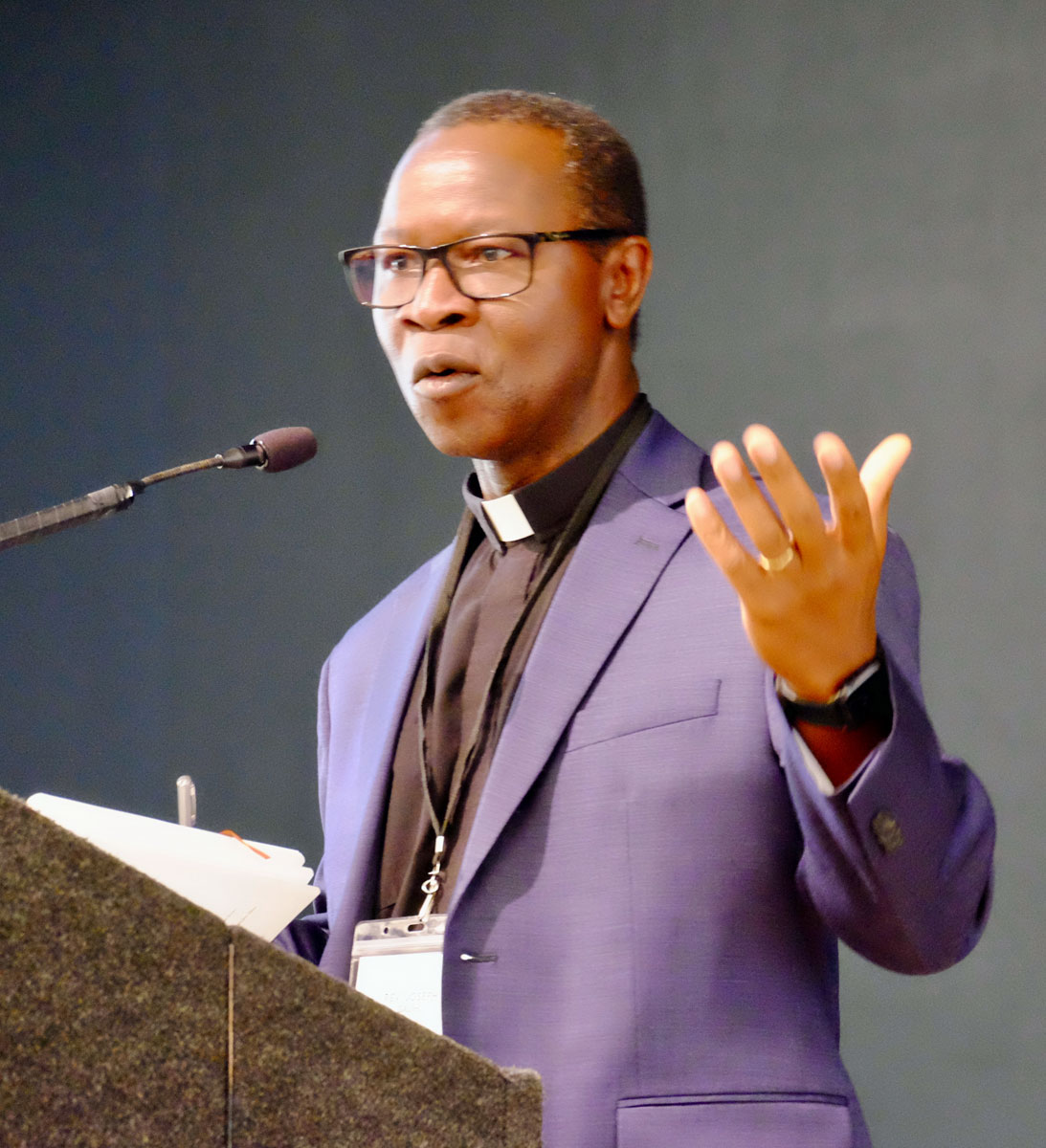
Fr. Joseph Salihu, chair of the diocesan Synod Committee, stressed that synodality is a way of prayerful discernment grounded in listening and journeying together. (Photo by Kiply Lukan Yaworski, Catholic Saskatoon News)
The Synod on Synodality has not been so much about what we are doing, but how, Salihu stressed, saying that an appropriate synonym for synodality is discernment.
“How do we as a diocese and as parishes respond to some very serious issues that we need to confront as a community?” he said, suggesting that rather than Roberts Rules of Orders, synodality calls for careful listening, praying and discernment – which is not always easy.
The Parish Reflection Tool introduced at Administration Day will be launched to parish councils and finance councils in October, with additional virtual training sessions available on line. The collection of responses, parish discernment and submission of responses will then happen over the next month, with a submission deadline of Nov. 29, 2026.
A diocesan-wide “Evaluation Assembly” involving the Diocesan Pastoral Council and Parish Pastoral Councils will then be held in the New Year, to share results and insights, before a “Letter to the Other Churches” style of report about what has taken place in Saskatoon diocese is submitted to the larger church.
“Synodality is not a program to complete — it is a way of walking together, in co-responsibility, in the image of God, in continuous companionship.” – presentation by the diocesan Synod Implementation Committee
-30-
Kiply Lukan Yaworski is the communications coordinator for the Roman Catholic Diocese of Saskatoon: rcdos.ca.
Communications and Catholic Saskatoon News are supported by gifts to the Bishop’s Annual Appeal: dscf.ca/baa.