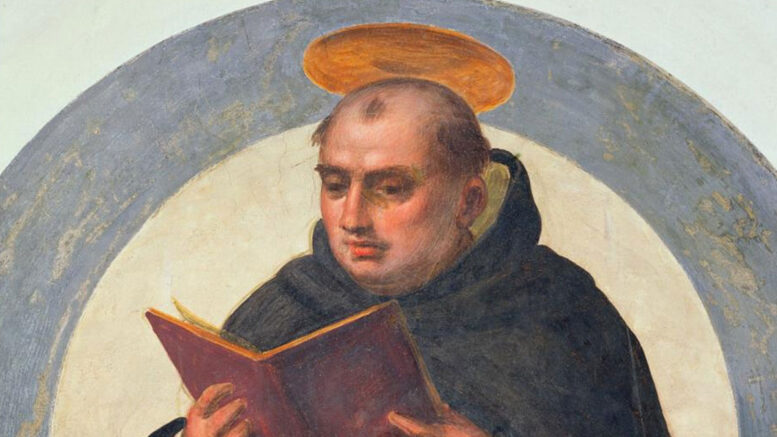
The National Catholic Bioethics Quarterly recently published an article by Fr. Greg Smith-Windsor of the Roman Catholic Diocese of Saskatoon on “The Thomistic Basis for Conscientious Objection in Medicine” (LINK).
The National Catholic Bioethics Quarterly based in Philadelphia, USA, seeks to foster intellectual inquiry by publishing articles that address the ethical, philosophical, spiritual, and clinical questions raised by modern medical sciences.
In the Winter 2025 edition of the quarterly journal, Fr. Gregory Smith-Windsor of Saskatoon addresses conscientious objection in medicine, in light of the ideas of St. Thomas Aquinas, including:
- a robust theory of the nature and authority of conscience;
- a legal theory surrounding the nature of just law;
- a political theory which unites the proper ends of citizens and the state; and
- a moral theory based on the end or good of acts.
“Taken together, the Thomistic philosophical system can contribute to and provide possible remedies when dealing with many contemporary societal and moral issues, such as contemporary debates concerning conscience rights,” observes Smith-Windsor, who is presently a doctoral candidate studying at the University of St. Thomas in Houston, Texas.
Smith-Windsor says in his conclusion: “Conscientious objection in medicine is one of the most hotly debated aspects of contemporary medicine. However, the vagueness endemic both in public references to conscience and to its discussion have been unhelpful to resolving any aspects of this debate. This paper, in seeking clarity where little is often to be found, has sought to provide a framework for future discussion.”
He notes “Clearly, when considering conscience rights we need to hold in view two extremes. If the government professes no interest in safeguarding the conscience rights of its citizens, then the logical outcome is tyranny. On the other hand, if invoking conscience rights as a kind of libertarian incantation were sufficient to defeat any opposed law, no legal system could survive. Rather than petty tyranny, we would be mired in anarchy.
“Finding a conclusive middle way between these two destructive extremes presents a difficulty that extends beyond the scope of this paper to fully resolve. However, this paper’s examination of St. Thomas’s ideas has shed some light on means by which conscientious objection might be fruitfully discussed.”
Read the article: “The Thomistic Basis for Conscientious Objection in Medicine” (PDF) -shared with permission.
-30-